
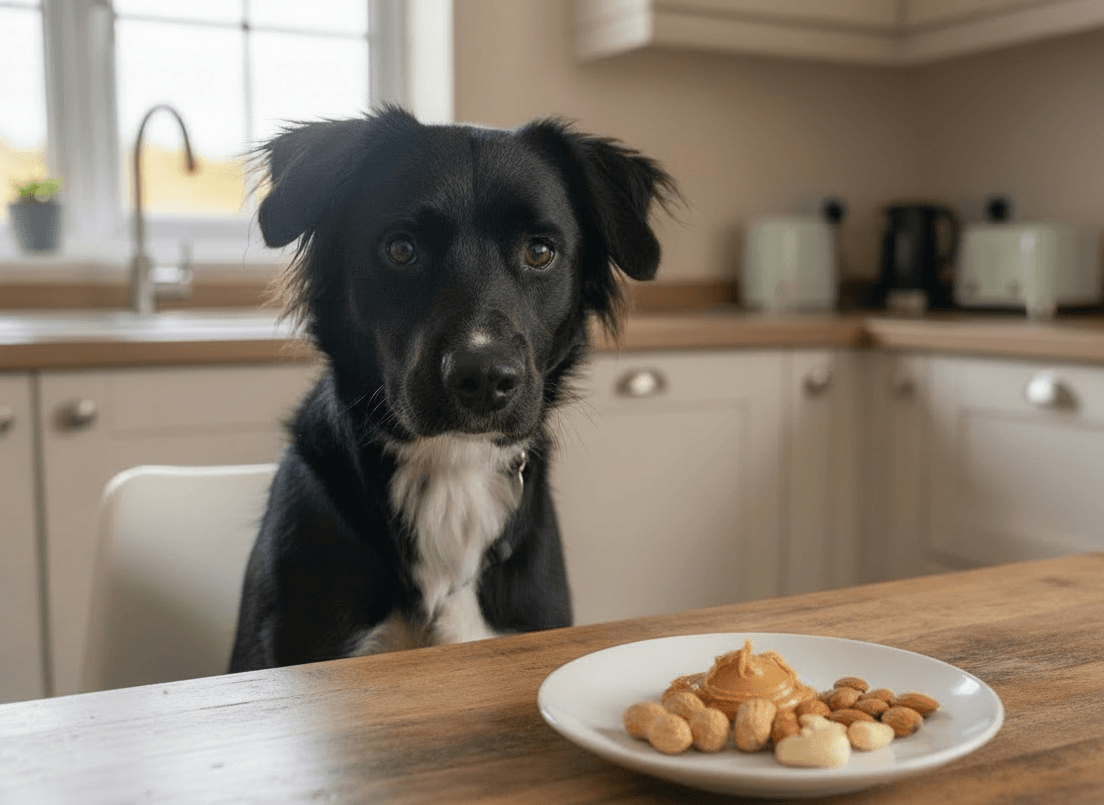
Photo of Our Jeff – background digitally enhanced using AI
Peanut butter is a favourite throughout dog households. It’s used for stuffing enrichment toys, hiding tablets, or rewarding good behaviour.
But in terms of peanut butter, peanuts, and other nuts, are they safe for dogs?
The short answer? Sometimes — but nuts are not all created equal. I want to break it down like this so you can treat it confidently.
Can Dogs Eat Peanut Butter?
Yes — plain peanut butter is generally safe for dogs in moderation.
It can be:
A high-value training reward
Great for enrichment toys
Useful for hiding medication
Packed with protein and healthy fats
But there are two important things to check before offering it.
1. Always Check for Xylitol
Xylitol is an artificial sweetener that is extremely toxic to dogs, even in small amounts.
Some peanut butter brands contain xylitol as a sugar substitute — and it can lead to:
Rapid drops in blood sugar
Seizures
Liver failure
Always check the label carefully.
2. Watch the Sugar & Salt Content
Choose peanut butter that is unsweetened, low in salt, free from additives, and made with 100% peanuts if possible. Bear in mind, peanut butter is high in calories, so bite size is everything.
Can Dogs Eat Peanuts?
Yes — unsalted, dry-roasted or raw peanuts are generally safe in small amounts.
However don’t stock salted or flavoured varieties, never give peanuts coated with chocolate and take out shells before eating.
Peanuts are high in fat, so they should only be an occasional treat.
What About Other Nuts?
Here’s where things get more cautious.
Nuts to Avoid Completely:
Macadamia Nuts
Highly toxic to dogs. Even small amounts can cause:
Weakness
Vomiting
Tremors
Overheating
Walnuts (especially mouldy ones)
Can cause digestive upset and neurological issues.
Nuts to Be Cautious With:
Almonds
Not toxic, but difficult to digest and can cause stomach upset.
Cashews
Generally safe in very small amounts, but high in fat.
In general, nuts aren’t a necessary part of your dog’s diet — and there are often better, more digestible options available.
Why Moderation Matters
Nuts and peanut butter are high in fat. Healthy fats matter, but excess can cause:
Weight gain
Digestive upset
Pancreatitis in severe cases
Treats — including peanut butter — should make up no more than 10% of your dog’s daily calorie intake.
Balance is everything.
Are There Better Alternatives?
Peanut butter is safe, but a majority of dogs prefer simpler, protein-rich treats made specifically for them.
Natural air-dried dog treats do the following:
High-quality protein
Simple ingredient lists
No artificial sweeteners
Easier digestion
They’re designed with dogs in mind — not adapted from human snacks.
Final Thoughts
So, can dogs eat peanut butter, peanuts, or nuts?
✔️ Plain, xylitol-free peanut butter — yes, in moderation
✔️ Unsalted peanuts — occasionally
❌ Macadamia nuts — never
⚠️ Other nuts — best avoided
When in doubt, keep it simple. Dogs don’t need complicated ingredients to be happy.
Often, the safest option is a natural treat made especially for them.
Treat Safely with Canine Crunchies
At Canine Crunchies, we believe treats should be simple, safe, and made for dogs — not borrowed from the cupboard.
Discover our natural air-dried dog treats
Made with wholesome ingredients and zero nasties
Perfect for training, enrichment, and everyday rewards
Because happy dogs crunch smarter. 🐕💛
References:
Blue Cross – Can dogs eat peanut butter