
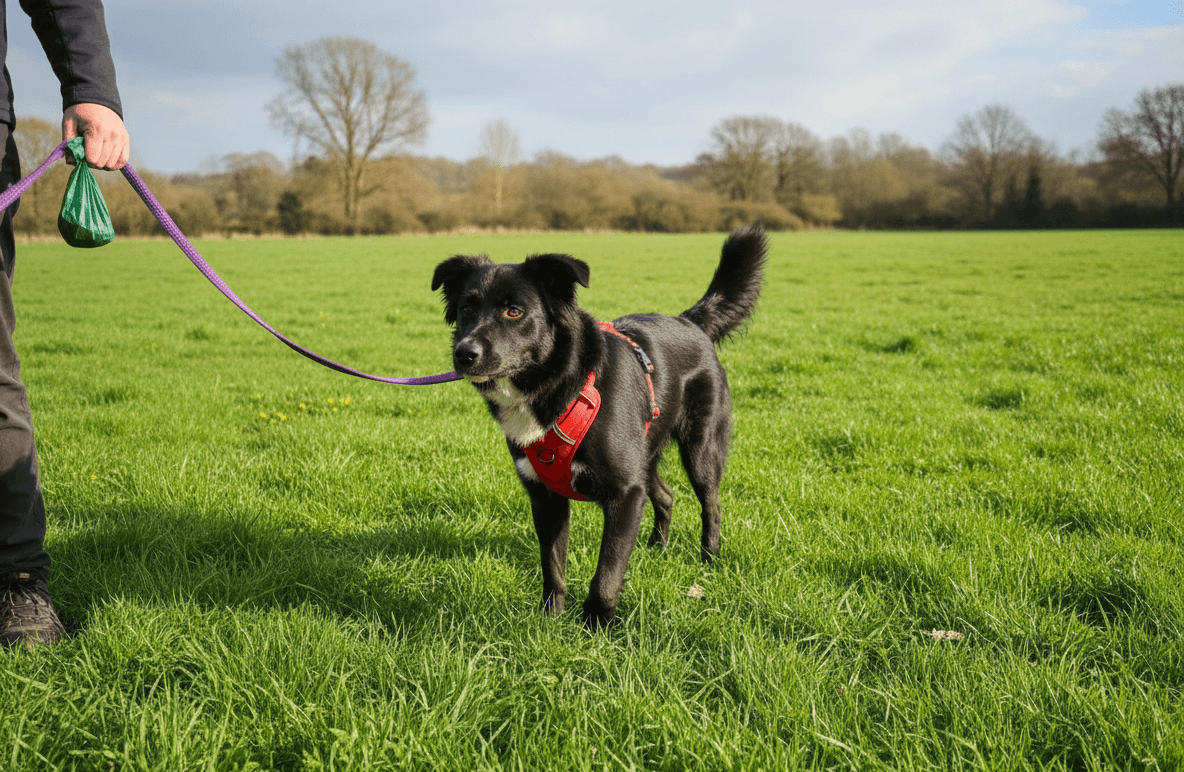
Photo of Our Jeff – background digitally enhanced using AI
Let’s talk About Something Every Dog Owner Sees Daily But Doesn't Always Discuss: Your Dog’s Poo
It might not be glamorous, but one of the major indicators of your dog’s health is its stool. From digestion and diet quality to stress levels and potential illnesses, what falls into the garden (or poo bag) speaks volumes.
So, what does healthy dog poo look like? And when should you be concerned?
Let’s Break It Down.
What Does Healthy Dog Poo Look Like?
Here’s the most honest and straightforward version of what good dog stool looks like:
Medium to dark brown
Firm but not rock hard
Log-shaped
Easy to pick up
Not overly smelly
It should maintain its shape without disintegrating or leaving residue behind.
Your dog’s digestive tract is probably doing its job well.
Colour: What It Means
Colour can convey helpful clues about your dog’s health:
Brown: Normal and healthy.
Yellow or Orange: May signal food intolerance, rapid digestion, or bile problems.
Green: Could be due to eating grass (typically benign in small amounts).
Black: May indicate digested blood — this could warrant veterinary concern.
Red Streaks: Fresh blood can indicate irritation, parasites, or colitis. Monitor this closely and consult your vet if it persists.
If you notice dramatic colour changes that don’t quickly resolve, it’s always a good practice to consult a professional.
Consistency: The “Poo Scale”
Consistency is just as important as colour:
Too Hard: Often associated with dehydration or insufficient fibre intake.
Too Soft: May suggest:
Sudden diet changes
Over-treating
Stress
Food intolerance
Watery Diarrhoea: Typically results from infection, parasites, dietary upset, or stress. If it lasts over 24–48 hours, contact your vet.
Frequency: What’s Normal?
Most dogs poo 1–3 times a day, depending on:
Diet
Size
Age
Activity levels
A sudden spike or drop in frequency can indicate digestive upset.
How Diet Influences Your Dog’s Poo
The quality of your dog's diet is a major contributor to stool quality. Highly processed foods and treats made with:
Artificial additives
Fillers
Added sugars
Low-quality meat derivatives
can lead to softer, smellier, or inconsistent stools.
In contrast, high-quality, natural ingredients support:
✔️ Better digestion
✔️ More consistent stools
✔️ Reduced waste
✔️ Less odour
Simple ingredients usually translate to simpler digestion.
Why Natural Treats Make a Difference
Treats are a part of your dog’s daily intake — and they have real value. Opting for natural, air-dried dog treats with minimal ingredients can prevent unnecessary digestive stress:
Less artificial processing
Fewer additives
No hidden nasties
Just proper, wholesome goodness.
And often? You’ll see the difference in your poo bag.
When to Call the Vet
Seek professional help if you suspect:
Persistent diarrhoea
Blood in stool
Black or tar-like stools
Excess mucus
Sudden ongoing changes
Lethargy with digestive issues
Trust your instincts — you know your dog best.
Final Thoughts
Monitoring your dog’s poo may not be glamorous, but it’s among the easiest ways to maintain your dog’s health. Firm and regular brown stools typically suggest that their diet is working well.
If issues arise, small tweaks — such as improving the quality of ingredients — can lead to significant changes.
Because good digestion supports:
Nutrient absorption
Immune function
Energy levels
Overall wellbeing
And yes… it can make garden clean-up much easier too.
Support Digestive Health with Canine Crunchies
At Canine Crunchies, we believe what goes in matters — because what comes out tells the story.
Explore our natural air-dried dog treats
Made with simple, wholesome ingredients
Zero artificial additives or fillers
Because happy dogs crunch smarter — and digest better too. 🐕💛
References:
The Kennel Club – Dog Poo: What a Change Could Mean