
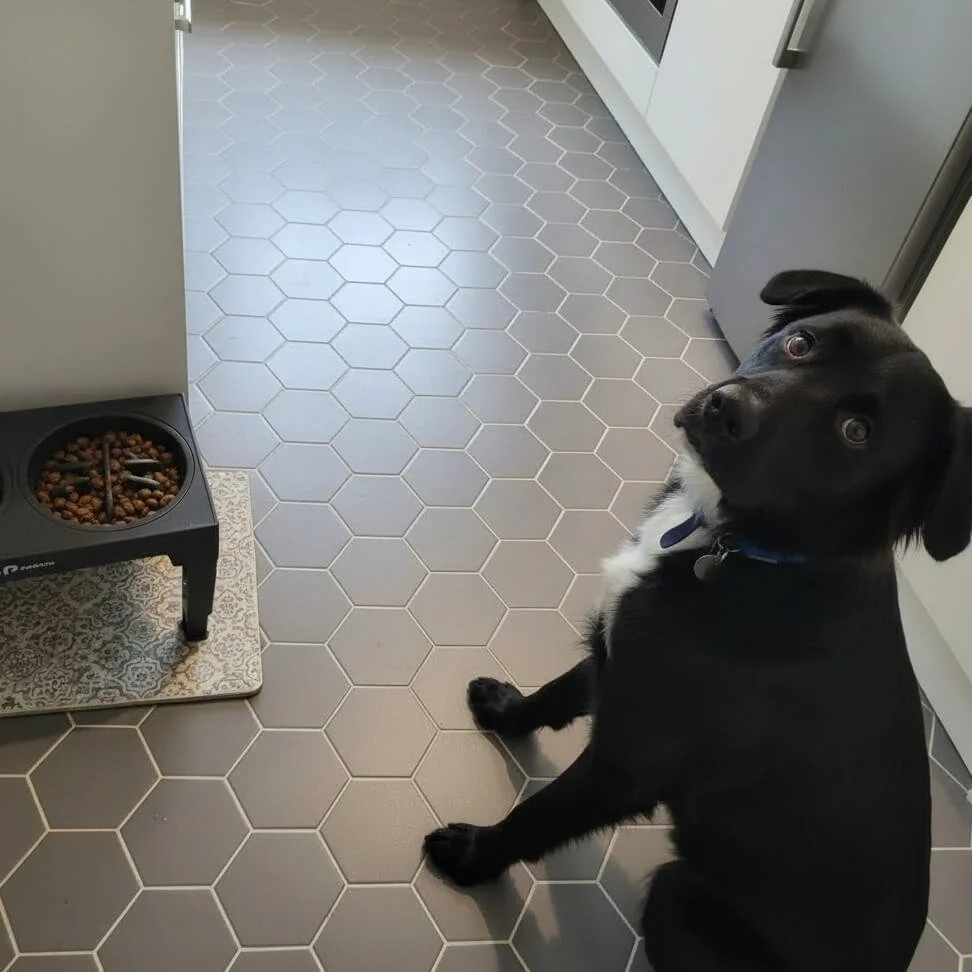
Photo of Our Jeff – background digitally enhanced using AI
Bloating in dogs is an excruciatingly distressing condition, full of potential damage, and in the most severe cases, deadly. The word bloat may be innocuous but for the dog parents, it is important to be cognizant (and to take preventive measures). The exciting part is that with proper feeding habits and choice of enrichment for your dog’s bloat can be greatly reduced.
Let’s discover what dog bloat is, why and how you can help stop it.
What Is Bloating in Dogs?
It's when a dog's stomach fills with gas, food or fluid, leading to expansion. It can lead to pain and discomfort, and in mild cases can cause anxiety. In extreme cases, bloating can advance to Gastric Dilatation-Volvulus (GDV), in which the stomach twists to prevent blood flow — an emergency that needs rapid veterinarian intervention. Bloat can affect dogs of any size, yet it is more common in large breeds and deep-chested dogs.
Common Causes of Bloating
Preventing bloat is one reason we need to understand the triggers for one. Common causes include:
Eating too quickly.
Consuming huge meals in a single sitting.
Exercise just before or after eating.
When you are food-feeding, this can lead to increased air swallowing.
Feeding time stress or anxiety.
Super processed or hard to digest food.
Make small changes to your dog’s daily routine and the chances of bloating can be greatly decreased.
1. Slow Down Mealtimes
Fast eaters have a greater tendency to suck in more air, making them more prone to bloat. With slow feeder bowls, to help your dog eat more slowly:
Using Slow feeder bowls
Spreading food over multiple dishes.
Feed the food by hand for the fastest part.
Slowing down the meals will improve digestion and turn that rushed meal into a calmer experience.
2. Feed Smaller, More Frequent Meals
One big meal a day is a poor thing–splitting your dog’s food into two or three small portions. This method helps to minimize the development of a large belly and supports a steady digestion during the day. Smaller portions can be very useful for larger breeds or for dogs that are sensitive to stomach distress.
3. Avoid Exercise Around Mealtimes
Eating as soon as possible after exercising may make bloat higher; bloating risk may increase if dogs exercise right after eating. As a general guideline:
Don't exercise for a minimum of 1 hour before meals.
Do not do strenuous exercise for 1 to 2 hours after eating.
Things like mild sniffing at the end of a meal, or soothing enrichment post-meal are safer alternatives
4. Develop a Calm Feeding Environment
Stress and anxiety lead to bloating, particularly in multi-pet households. Get your dog to eat in a quiet place, distraction-free environment where he does not get rushed and feels calm enough, this helps him to eat at his own pace through relaxation. A dog relaxed in the moment is more easily digestible.
5. Start With Digestible Good Quality Foods
Extremely processed or non-healthy foods can be very difficult to digest and gas producing agents, and may make gas secretions go out from it. Choose a food high in natural ingredients and easy to digest, easy and good foods for the gut. It’s a principle for treats and chews as well, where quality is just as important as quantity.
6. Treat Chews Like Calm Enrichment (not Right After Meals)
Chewing relaxes your dog and reduces its tension and anxiety as well. Given that chewing is only done at such a reasonable distance to the food that can really help digestion and relax dogs’ stomach, chew your dog at a distance that will not cause the dogs to “overheat” and can provide an opportunity for digestion to occur. Long-term chews can be a great mental help in quiet times at home.
Signs of Bloating to Watch For
The more you prevent it, the clearer the warning signs of bloating:
Distended or hard abdomen.
Pacing or restlessness.
Excessive drooling.
Retching without vomiting.
Whining or signs of pain.
If you suspect any of these symptoms, call your veterinarian immediately.
Final Thoughts
Calm diet, good food and activities helping to regulate digestion can help reduce bloating in the dog, this can all be achieved through routine. Only tiny gradual changes make a major difference but just a little bit of consistent adjustments over time, are small at really small, and if you make enough of a change can be made over time, will cause that great comfort and comfort of your dog to benefit.
Support Healthy Digestion with Canine Crunchies
At Canine Crunchies, we believe prevention starts with natural choices and thoughtful enrichment.
Discover our natural air-dried chews
Perfect for calm enrichment away from mealtimes
Made with simple ingredients and zero nasties
Because happy dogs crunch smarter. 🐕💛