
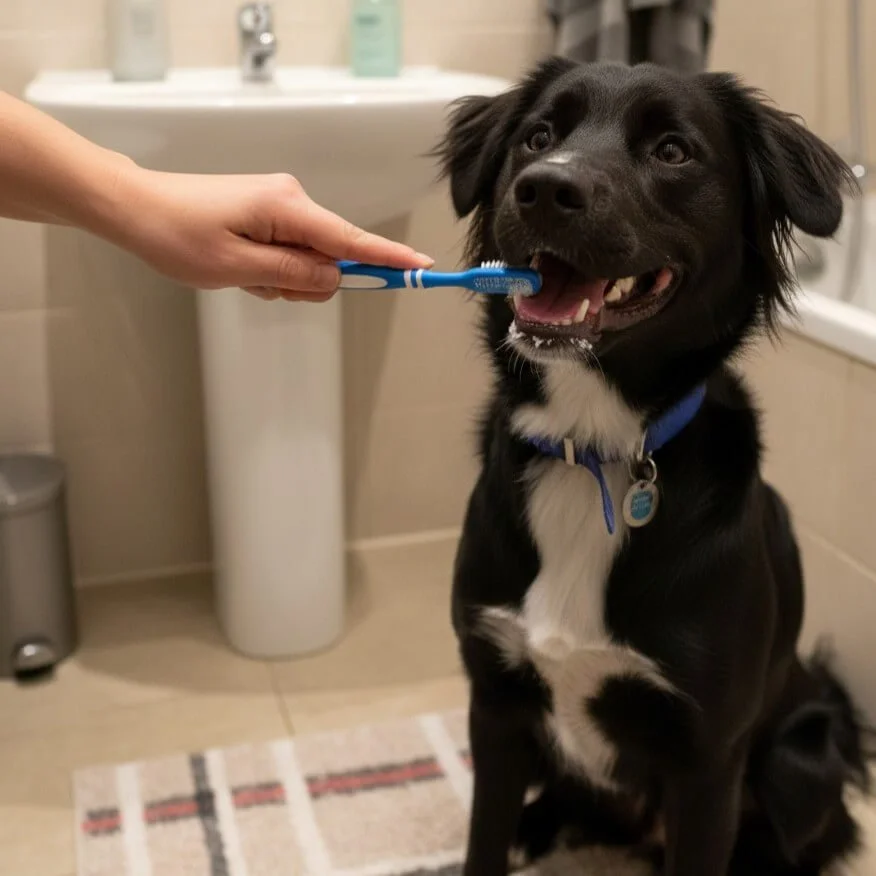
Photo of Our Jeff – background digitally enhanced using AI
As many pet parents already know, a dog’s dental health impacts its overall well-being a great deal — on a large scale. Bad oral hygiene can contribute to everything from bad breath to serious health problems, affecting everything from appetite to behaviour – and even internal organs. The good news? Keeping your dog’s teeth in tip-top condition doesn’t have to be a headache. With the proper habits, suitable chews and some repetition, you can keep those tails wagging and teeth glowing all day.
Why Dental Health Matters for Dogs
Dogs can develop plaque and tartar on their teeth, similar to humans, if not treated. Over time, this can lead to:
Bad breath.
Gum disease.
Tooth decay or loss.
Pain and difficulty eating.
Bacteria that get into the bloodstream and attack vital organs.
All of these things keep your dogs feeling happy, relaxed, and healthy for countless years to come.
Signs Your Dog May Have Dental Issues
Watch for the following signs:
Persistent bad breath.
Red or swollen gums.
Yellow or brown tartar build-up.
Excessive drooling.
Unwillingness to chew or eat.
If you see any of those signs, it’s vital to speak with your veterinarian.
Daily Habits That Support Good Dental Health
1. Brushing Your Pet’s Teeth
The best way to prevent plaque accumulating on your dog's teeth is to brush them often.
Here are some top tips:
Only use dog-specific toothpastes.
Be orderly and keep the sessions short.
You can’t always brush daily, but try a couple of times a week.
2. Dental Chews & Natural Chewing
Habit of chewing is a natural behaviour that plays an important role in mouth hygiene.
The right chews can help:
Scrape away plaque.
Massage gums.
Reduce tartar build-up.
Strengthen jaws.
Air-dried and natural chews are especially effective, which encourage longer, more conscious chewing.
3. Diet Matters
Quality and balanced diet is of paramount importance for oral health. That can remove residue left on teeth by crunchy textures and use of natural ingredients.
4. Regular Vet Check-Ups
Routine dental checks also help to catch issues early on to keep them from being painful or costly. The visit of your dog to the vet for dental care is important.
Best Dental Chews For Your Dog
Not all chews are created equal. When you select dental chews:
Simple ingredients.
No artificial additives or fillers.
A texture that promotes chewing (not dissolving them right away).
A size suitable for your dog.
Natural chews are a win-win solution with dental and enrichment benefits.
Final Thoughts
Maintaining the dental health of your dog is the most altruistic thing you can do for him. With regular brushing, health checks and high-quality natural chews, you will be able to catch problems early enough to keep a smile that is happy.
Support Your Dog’s Dental Health Naturally
At Canine Crunchies, we believe dental care should be simple, natural, and enjoyable.
Explore our range of natural air-dried chews
Designed to support dental hygiene while satisfying natural chewing instincts
No nasties — just wholesome, dog-approved goodness
Because a healthy mouth means a happier dog 🐾💛