
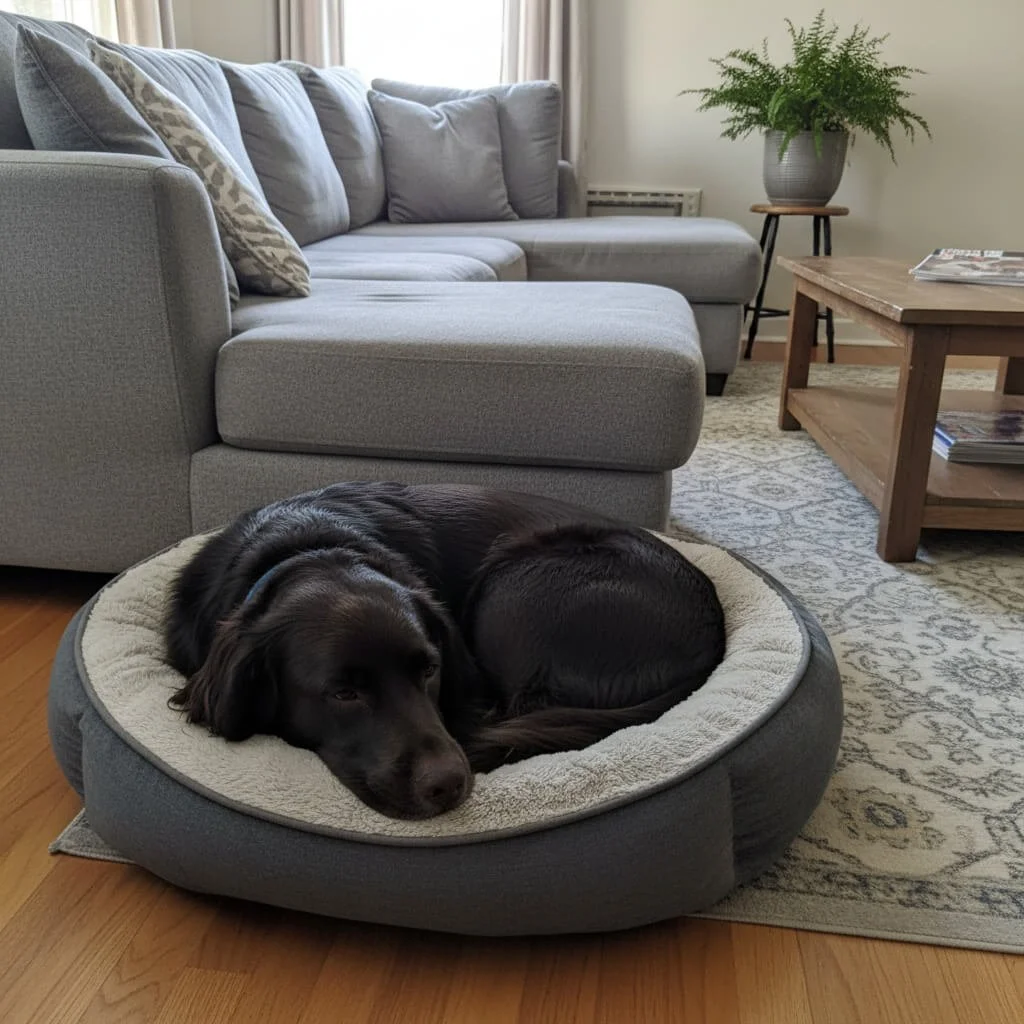
Photo of Our Jeff – background digitally enhanced using AI
It is hard for your dog when you go out. Too many dog parents lack knowledge that dog separation anxiety sometimes comes with behaviours such as excessive barking or destructive behaviour, according to researchers. It can be upsetting to read but in reality separation anxiety really can be reduced with time, empathy, help and proper attention.
Here’s what separation anxiety is, why it happens and how to make sure your dog can feel safe and relaxed even when left alone.
What Is Separation Anxiety in Dogs?
Separation anxiety is a stress-produced response, which occurs when the dog becomes concerned or distressed when left alone without its owner. Separation anxiety is a fear-based disorder that inflicts emotional distress rather than a desire to become a nuisance. Because dogs are pack animals, it is completely normal for a dog to require proximity to its human. But if the bond between them is something anxiety-provoking, it is a concern for both their health and your peace of mind. For a dog to feel anxious, it should certainly be avoided.
Common Signs of Separation Anxiety
Dogs express anxiety differently in the first place. For better or for worse, though, a few symptoms are most common:
Overbearingly barking, whining or howling when left alone.
Destructive behaviour (chewing furniture, doors and skirting boards).
Pacing, trembling, or restlessness.
Toileting in the house even as a trained house mate.
Extensive drooling or panting.
Attempts to escape.
Loss of appetite when alone.
This may actually be due to separation anxiety if your dog goes back to its normal way of life the moment you return and again the only time he makes such an effort is when you're present.
Why Does Separation Anxiety Occur?
A change in routines or situations often triggers the beginning of separation anxiety. The usual triggers are:
A new house or recent move.
Changes to work schedules.
Death of a family member or animal.
History in Rescue or Rehoming.
Insufficient early education for independence.
Anxiety rates might be higher among dogs that start growing close to close friends and who haven’t been learning to be alone very slowly.
How to Help a Dog With Separation Anxiety
1. Practice Gradual Departures
Make the process a little shorter each time, then allow your dog to gradually gain more and more time when it is safe for him to be alone. Calm, low-key departures and arrivals prevent anxiety from mounting around these times.
2. Create a Calm, Safe Space
Create a comfy area where your dog is safe. Adding familiar bedding, toys, and comforting smells. But some dogs do well with background noise — calming music, the radio.
3. Use Mental Enrichment
Providing mental stimulation may help you channel anxious energy elsewhere to keep your dog busy when you are away. Great options include:
Food-dispensing toys.
Puzzle feeders.
Natural, long-lasting chews.
Chewing is a natural calming behaviour, and it can be a way to calm your dog down when you’re alone.
4. Avoid Punishment
Punishing anxiety-focused behaviour further escalates fear and stress. Instead let the positive stuff, the calm reassurance, the predictable routines give a sense of confidence, build the momentum.
5. Consider Professional Support
For more extreme cases, a well-trained dog trainer, or behaviourist, can come in handy. Your vet might also suggest behaviour plans or therapies that support you if that is available.
The Place of Routine and Reassurance
Dogs perform best when things are predictable. A dog that is sad enough to get out of bed alone will give you a lot worse sleep without him, or even feel hungry. If you have at least one daily feeding, walking, playing, and relaxing schedule that is consistent, your dog will be a safe friend. The structure increases self-esteem, and there is less fear of abandonment.
Final Thoughts
Separation anxiety is a nasty habit, but most dogs--if they take the right time without any grudges from their owners or their care-givers or have all the necessary equipment--can learn how to be calm and safe themselves. Small, frequent steps combined with enrichment and reassurance can greatly improve your dog's emotional state.
Your dog isn’t being “naughty”; they’re asking for help.
Help Calm Alone Time with Canine Crunchies
At Canine Crunchies, we believe calm, confident dogs start with natural enrichment and wholesome routines.
Explore our natural air-dried chews
Ideal for calming enrichment when your dog is home alone
Made with simple ingredients and absolutely zero nasties
Because happy dogs crunch smarter — even when you’re not home. 🐕💛