
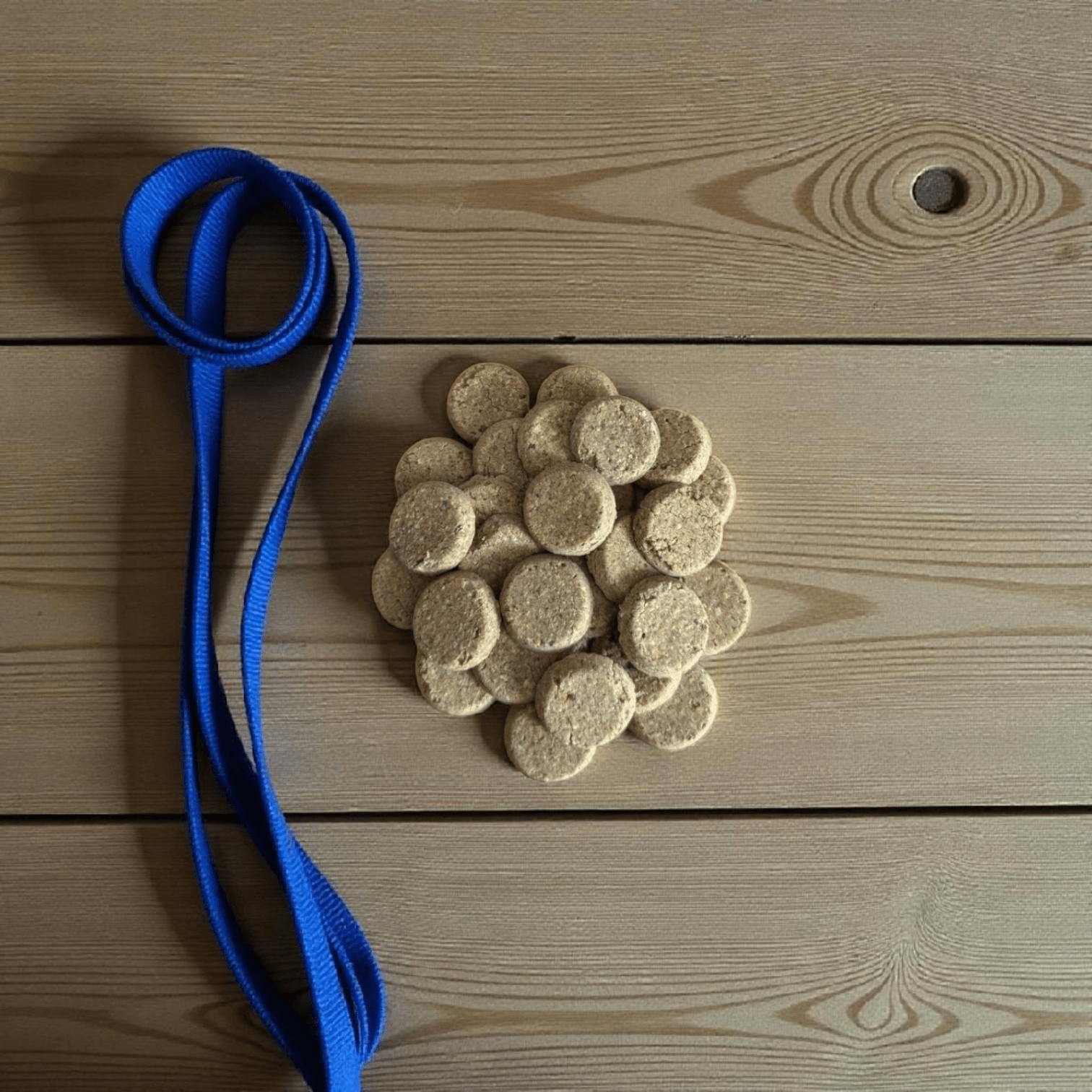
To train your dog doesn’t have to involve labouring — for most dogs, it’s the best part of their day. Food and treats are an excellent way to teach tricks, build confidence and bond, and are one of the most beneficial and positive ways to do so.
At Canine Crunchies, we think training should be enjoyable, rewarding and fuelled by natural, healthy snacks
Why Food & Treats Work So Well for Dog Training
Dogs learn best when something is in it for them — and food is a great motivator. A dog is the best when it’s served and served right. Treat-based training helps to:
Encourage focus and engagement
Reinforce positive behaviour quickly
Build confidence, especially in nervous dogs
Make learning enjoyable and stress-free
Dogs are more likely to repeat the behaviour you’re teaching, at least in part, when such rewards are regular and purposeful.
Choosing the Right Treats for Training
Not all treats are created equal — and most notably, when you’re training.
Look for treats that are:
Small and easy to chew (so training keeps flowing)
Highly palatable to keep motivation high
Natural and air-dried, with simple ingredients
Low in nasties so they’re safe for frequent use
Air-dried snacks are great because they’re flavour-filled and free of fillers or artificial ingredients.
Start Simple & Build Up
Start with basic tricks your dog can master quickly, such as:
Sit
Paw
Spin
Touch
Reward instantly when your dog gets it right. Timing matters — the treat should appear at the same time as when the behaviour occurs to facilitate your dog’s ability to connect. As long as your dog has mastered the basics, you can move on to advanced tricks like roll over, weave or tidy up toys.
Use Treats as Guidance, Not Bribes
A treat should lead the dog to find its target, not distract it in some direction. Use the treat to guide your dog. Once the dog knows the trick, reward intermittently. Co-occur treats with verbal praise and enthusiasm. With time, your dog will follow cues rather than beg for food in an expectant fashion.
Keep Training Sessions Short & Fun
Dogs learn best in short bursts. Aim for:
5–10 minute sessions
1–3 times per day
End on a success to keep confidence high
Stick to a good outcome to maintain confidence. If your dog gets bored, stop and return later. Training should always feel uplifting — never forced.
Adjust Treat Value for Trick Difficulty
Not every trick is worth the same reward.
Low-value treats for easy or well-known tricks.
High-value treats for new or difficult skills.
It helps inspire and enthusiasm in your dog to know the future that is right next to them.
Be Consistent & Patient
Every dog can learn at its own speed. Stay consistent with your cues, rewards, and expectations. Celebrate the little wins together.
As you know, training isn’t only about tricks. It provides:
Mental stimulation
Confidence building
Stronger communication between you and your dog
Train Smarter with Canine Crunchies
At Canine Crunchies, our natural air-dried treats are perfect for training sessions big and small.
Shop our natural training-friendly treats
Ideal for reward-based training and enrichment
Made with simple ingredients and zero nasties
Because happy dogs crunch smarter — and love learning every step of the way. 🐕💛