
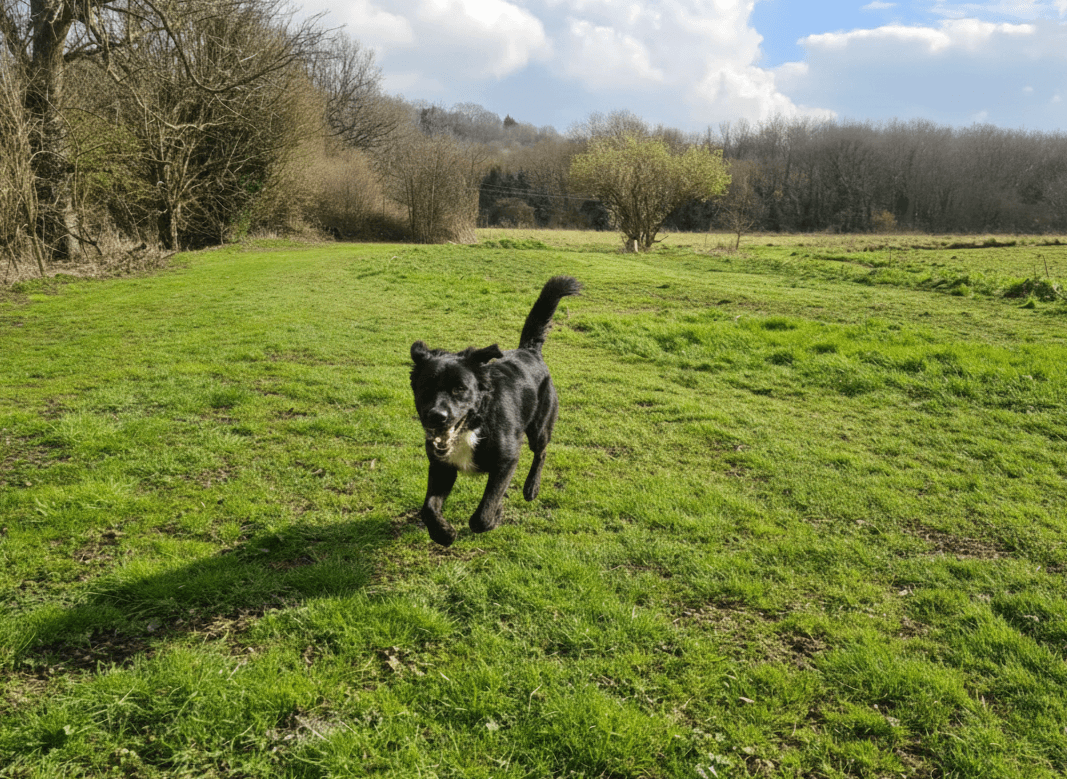
Photo of Our Jeff – background digitally enhanced using AI
How much exercise should my dog get is the question that dog owners most frequently ask.
The truth? It depends.
Each dog has their own unique requirements that stem from their age, breed, health condition and personality traits. Your dog needs daily exercise because it helps him or her attain their best physical health, mental wellness and overall happiness.
Let’s break it down in a simple, practical way.
Why Exercise Is So Important for Dogs
Exercise isn’t just about burning energy. It helps:
Maintain a healthy weight
Support joint and muscle strength
Reduce anxiety and stress
Prevent boredom and destructive behaviour
Improve sleep quality
Strengthen your bond
A well-exercised dog is usually a calmer, happier companion at home.
How Much Exercise Does a Dog Need by Age?
Puppies
Puppies need to spend their energy, but they will become exhausted after a brief time. The best practice requires 5 minutes of planned physical activity for every month of age, which should happen twice a day.
Short walks, gentle play, and enrichment games are perfect.
Young puppies should not exercise too much because their joints need time to develop.
Adult Dogs
Most adult dogs need around 30 minutes to 2 hours of exercise per day, depending on breed and energy levels.
High-energy breeds (like Border Collies, Labradors, Spaniels, Huskies) might need closer to 1.5–2 hours daily. Whilst Lower-energy breeds (like Bulldogs or Shih Tzus) might be perfectly happy with 30–60 minutes.
Here are some ways you can mix up your walks:
Walks
Off-lead play
Training sessions
Enrichment games
Chewing time (yes, this counts as mental exercise!)
Senior Dogs
Older dogs need to exercise though they should use a less intense method of movement.
The combination of slow-paced walks and light playtime can:
Maintain mobility
Support joint health
Keep weight under control
Always adjust based on comfort levels and veterinary advice.
Don’t Forget Mental Exercise
Physical walks are important, but mental stimulation is just as valuable.
Your dog will solve problems with his brain through these activities: Sniffing, puzzle games, training sessions, and chewing. Mental enrichment can tire a dog out just as effectively as a long walk.
Your dog needs additional mental exercises when these signs appear:
Excessive barking
Chewing furniture
Restlessness
Attention-seeking behaviour
Sometimes it’s not more miles — it’s more brain work.
Signs Your Dog Is Getting Too Little (or Too Much) Exercise
Too Little Exercise:
Weight gain
Hyperactivity indoors
Destructive behaviour
Difficulty settling
Too Much Exercise:
Stiffness or limping
Excessive fatigue
Reluctance to move
Sore paws
Balance is key.
Where Treats Fit Into an Active Lifestyle
Exercise and nutrition go hand in hand.
Active dogs require more calories to maintain their weight, which makes natural protein-rich treats beneficial during training and extended periods. The key is mindful portioning — treats should complement meals, not replace them.
High-quality, natural treats also make fantastic rewards during:
Recall practice
Agility work
Trail walks
Indoor enrichment sessions
Choose treats that fuel your dog properly — without unnecessary fillers or additives.
Final Thoughts
So, how much exercise do dogs need?
Most dogs thrive on at least 30–60 minutes of daily exercise, with higher-energy breeds needing more. Adding mental stimulation, regular play, and quality bonding time, will result in a happy, balanced dog.
Just remember — it’s not about exhausting your dog. It’s about meeting their physical and emotional needs consistently.
Support Active Dogs with Canine Crunchies
At Canine Crunchies, we believe healthy movement deserves wholesome fuel.
Explore our natural air-dried dog treats
Perfect for training, recall, and adventure days
Made with simple ingredients and zero nasties
Because happy dogs crunch smarter — and move better too. 🐕💛
References:
PDSA – How Much Exercise Does Your Dog Need?