
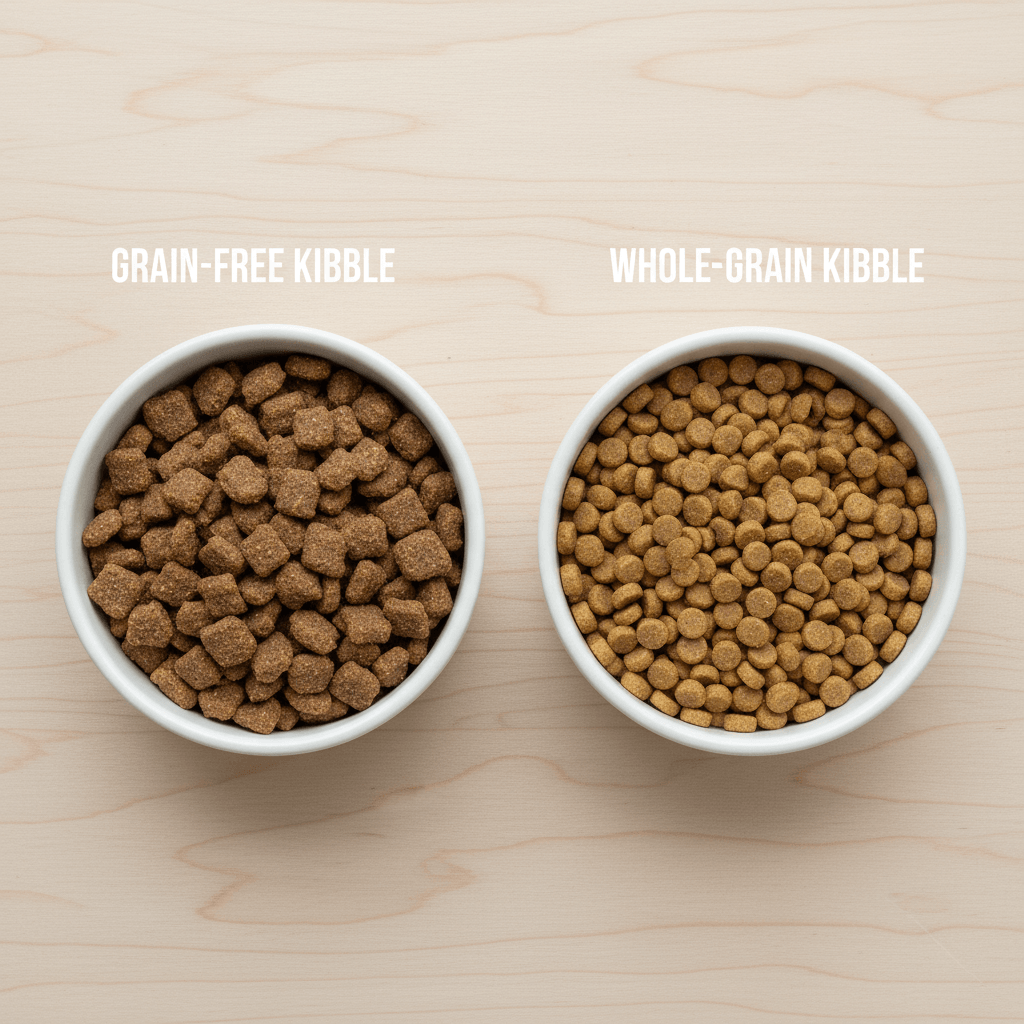
Every time there’s debate on how to choose food — and in some cases even treat your dog with a treat — it’s because:
Grain-free or whole grain — which is superior?
You’ve most likely noticed both options on the shelves, each of them advertising the healthiest option. But the reality is that the correct answer is up to your particular dog. We just need to get it down to the nitty-gritty for you know, so that you may make confident and informed decisions for your four-legged friend.
Now, What is Grain-Free?
Dog food and treats are devoid of traditional grains, as follows:
Wheat
Corn
Barley
Oats
Rice
They often use alternatives instead with the following:
Sweet potato
Peas
Lentils
Chickpeas
Grain-free diets became increasingly popular because of fears about food allergies and food sensitivities in dogs.
Do Dogs Need Grains?
And unlike many, don’t believe it – most dogs absorb grains properly.
Whole grains can provide:
Fibre for healthy digestion
Essential vitamins and minerals
Steady-release energy
Support for gut health
In fact, they may form part of a good nutritional diet.
When Is Grain-Free a Good Option?
If your dog has:
Diagnosed grain allergies
Ongoing skin irritation due to grains
Specific grains causing digestive upset.
Real allergies to grain, conversely, have far less incidence than it is apparent. Protein sources (like certain meats) are typically more prone to sensitivities than grains. Avoid making a big change to your diet if you might have a food sensitivity.
The Bigger Question: Ingredient Quality
It is the reality that whether those items are grain-free or whole grain: ingredient quality is far more important than any label.
Highly processed foods filled with:
Artificial additives
Fillers
Low-quality proteins
Excess sugars
…won’t promote your dog’s well-being — grain-free or not
Instead, focus on:
Clearly listed ingredients
Recognisable, natural components
High-quality protein sources
Minimal processing
Dogs love simple, wholesome ingredients.
What About Dog Treats?
When it comes to animal treats however, the rules of the game hold as true: even though treats without grains can be helpful for sensitive dogs there can always be health in whole grains.
The essential questions are:
Is it made with natural ingredients?
Is the protein source high quality?
Are there artificial colours, preservatives, or flavourings?
Does it support my dog’s overall diet?
Treats should enhance the dishes of your dog — not compete with them.
So… What’s Best for Your Dog?
The honest answer?
It depends on your dog’s:
Health history
Digestive tolerance
Activity level
Veterinary guidance
There are no one-size-fits-all answers. The best diet is one that keeps your dog:
Energetic
Comfortable
Shiny-coated
At a healthy weight
Excited for mealtimes
Because every dog is so different.
Choose Natural, Whatever You Decide
At Canine Crunchies, we love what we can imagine. If grain-free or whole grain is your preference, the important answer remains the following:
Natural ingredients
No artificial nasties
Quality you can trust
Treats that support overall wellbeing
Make Treat Time Count with Canine Crunchies
Looking for wholesome, natural treats to support your dog’s diet?
Explore our natural air-dried treats
Made with simple ingredients
Perfect for sensitive tummies and happy crunchers
Because happy dogs crunch smarter. 🐕💛
References:
Which? – Dog Food and Grain‑Free Diets